

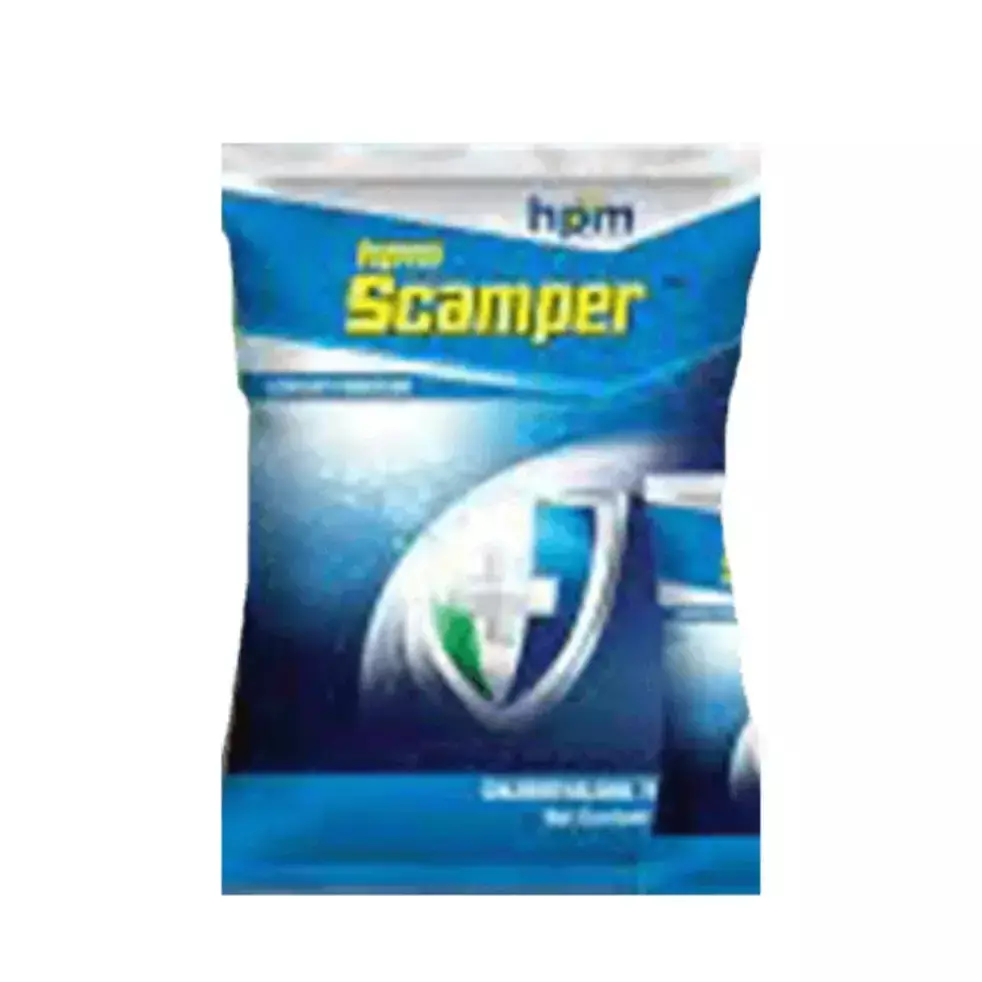
Hpm Scamper
Available Offer
HPM Scamper Fungicide (Chlorothalonil 75% WP)
The Ultimate Shield Against Potato Blight and Groundnut Leaf Spots.
HPM Scamper is a high-performance contact fungicide designed to protect your crops before diseases attack. Powered by Chlorothalonil, it creates a strong barrier on leaves that stops fungi from entering.
Best for: Farmers looking for a cost-effective, broad-spectrum solution to prevent Early and Late Blight in potatoes and Tikka Leaf Spot in groundnuts.
Why Choose This Product? Key Benefits
- ⏱️Double Protection: Effectively controls both Early Blight and Late Blight, saving you from buying multiple products.
- ?️Resistance Fighter: Uses a multi-site mode of action, making it very difficult for fungi to develop resistance.
- ⏳Long-Lasting Defense: Stays active on the leaf surface for 10 to 14 days, reducing the number of sprays needed.
- ?️Rainfast Technology: Sticks tightly to leaves and does not wash off easily during rain or irrigation.
- ?Green Leaf Preservation: Keeps leaves green and healthy for longer, directly boosting potato tuber size and groundnut yield.
Technical Specifications
| Parameter | Details |
|---|---|
| Brand Name | HPM Scamper |
| Technical Name | Chlorothalonil 75% WP |
| IRAC MoA Code | M5 (Multi-site Contact Activity) |
| Chemical Group | Chloronitrile |
| Formulation | Wettable Powder (WP) |
| Toxicity Label | Class 9 (Environmentally Hazardous) |
How It Works: Mode of Action
HPM Scamper acts as a multi-site inhibitor. It attacks the fungus at several critical points simultaneously, ensuring the pathogen cannot survive.
- Energy Blockade: It stops the fungus from producing energy (ATP) by disrupting glycolysis.
- Cellular Disruption: It depletes Glutathione, a vital molecule for fungal cell health, causing the cell to die.
- Spore Prevention: It prevents fungal spores from germinating and penetrating the leaf surface.
Note: This is a contact fungicide. It stays on the surface to prevent infection and does not cure existing disease inside the plant.
Target Crops & Pests
| Crop | Target Pest(s) |
|---|---|
| Potato | Early Blight, Late Blight |
| Groundnut | Tikka Leaf Spot, Rust |
| Vegetables (Tomato/Cucurbits) | Anthracnose, Downy Mildew, Fruit Rot |
Dosage & Application Guide
The Golden Rule: Always follow the "Dose per Acre" for accurate results.
Dosage per Acre, Litre, & Pre-Harvest Interval (PHI)
| Crop | Dose (g / Acre) | Water (L / Acre) | Dose (g / Litre) | PHI (Days) |
|---|---|---|---|---|
| Potato | 350 - 500 g | 240 - 320 L | 1.5 - 2.0 g | 14 Days |
| Groundnut | 350 - 460 g | 240 - 320 L | 1.5 g | 14 Days |
| Other Veg | 350 - 500 g | 200 - 300 L | 1.5 - 2.0 g | 14 Days |
*PHI = Pre-Harvest Interval: The minimum number of days to wait between the last spray and harvesting.
How to Apply: Best Practices
- Timing: Apply strictly as a preventive measure (prophylactic) before disease symptoms appear or immediately upon first sign of spots.
- Mixing: This is a Wettable Powder (WP). Pre-mix the required dose with a little water to make a smooth slurry before adding it to the main tank.
- Coverage: Use high water volume (240L+ per acre). Ensure full coverage of the leaf, including the undersides, as the medicine does not move inside the plant.
- Safety: Always wear PPE (gloves, mask, goggles). Wash hands thoroughly after use. Avoid spraying near fish ponds.
Frequently Asked Questions
1. Is HPM Scamper a systemic fungicide?
No, it is a contact fungicide. It stays on the leaf surface to form a protective shield. It will not cure disease that is already deep inside the plant stem.
2. Can I mix Scamper with other chemicals?
Yes, it is compatible with most insecticides and fungicides. However, never mix it with alkaline products like Bordeaux mixture or Lime Sulfur.
3. How often should I spray for Potato Blight?
In humid or wet weather ("blight weather"), spray every 7 to 10 days. In dry weather, a 10 to 14-day interval is sufficient.
4. What happens if it rains after spraying?
HPM Scamper is highly lipophilic (oil-loving), meaning it sticks well to the waxy leaf surface and resists washing off once dry.
5. Is it safe for bees?
It is generally safe for bees if applied when they are not actively foraging (late evening). However, always avoid direct spraying on hives.
Safety & Disclaimer
Always read and follow the instructions on the official product label. The information provided here is for guidance only. Use personal protective equipment (PPE) during application.