

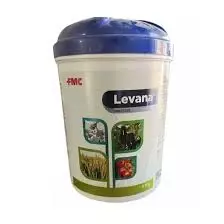
Levana
Available Offer
Levana Insecticide by FMC (Thiamethoxam 25% WG)
The Broad-Spectrum Systemic Solution for Sucking Pests and Stem Borers.
Levana (manufactured by FMC Corporation) is a premium agricultural insecticide powered by Thiamethoxam 25% WG. Designed for modern resistance management, it offers rapid control of tough pests in Rice, Wheat, Cotton, and Vegetables. Its superior "99% Wet Sieve" formulation ensures uniform coverage and maximum plant safety.
Note:This page details the agrochemical product. For the literary character "Levana" (FMC - Female Main Character), please refer to fiction archives.
Why Choose This Product? Key Benefits
- ⏱️Rapid "Antifeedant" Action: Pests stop feeding immediately after contact, preventing crop damage and viral transmission even before they die.
- ?️Systemic Protection: Absorbed by roots and leaves, it travels efficiently via the Xylem to protect new growth from the inside out.
- ⏳Long-Lasting Residual Control: Creates a "toxic reservoir" within the plant, offering extended protection against migrating pests like Brown Plant Hoppers.
- ?️Excellent Rainfastness: Rapidly absorbed into the plant tissue, ensuring efficacy is maintained even if it rains shortly after application.
- ?Superior Crop Safety: The high-purity WG formulation dissolves completely (pH 7.0–9.0), preventing nozzle clogging and leaf burn (phytotoxicity).
Technical Specifications
| Parameter | Details |
|---|---|
| Brand Name | Levana |
| Technical Name | Thiamethoxam 25% WG |
| IRAC MoA Code | Group 4A (Neonicotinoids) |
| Chemical Group | Thianicotinyls |
| Formulation | Water Dispersible Granules (WG) |
| Toxicity Label | Blue (Moderately Toxic) |
How It Works: Mode of Action
Levana acts on the Central Nervous System of the insect. It mimics Acetylcholine, the nerve transmitter.
- Entry: Enters the pest via contact (spray) or ingestion (sucking treated sap).
- Binding: The molecule binds irreversibly to the nicotinic acetylcholine receptors (nAChRs).
- Paralysis: Unlike natural acetylcholine, Levana cannot be broken down by enzymes. This causes permanent nerve hyperexcitation, tremors, paralysis, and death.
Because it targets a different site than organophosphates or pyrethroids, it is excellent for breaking resistance.
Target Crops & Pests
| Crop | Target Pest(s) |
|---|---|
| Rice (Paddy) | Stem Borer, Gall Midge, Leaf Folder, Brown Plant Hopper (BPH), WBPH |
| Cotton | Jassids, Aphids, Thrips, Whiteflies |
| Vegetables (Tomato, Okra, Brinjal) | Aphids, Whiteflies, Jassids |
| Wheat & Mustard | Aphids (Sucking Pests) |
Dosage & Application Guide
The Golden Rule: Always follow the "Dose per Acre" for accurate results. Dilution (ml/liter) varies by pump size.
Dosage per Acre, Litre, & Pre-Harvest Interval (PHI)
| Crop | Dose (gm / Acre) | Water (L / Acre) | Dose (gm / Litre) | PHI (Days) |
|---|---|---|---|---|
| Rice | 40g - 60g | 150 - 200 L | 0.3g | 14 |
| Cotton | 40g - 80g | 150 - 200 L | 0.3 - 0.5g | 21 |
| Vegetables | 40g - 80g | 150 - 200 L | 0.3 - 0.5g | 5 - 7 |
*PHI = Pre-Harvest Interval: The minimum number of days to wait between the last spray and harvesting. Dosages are indicative based on standard Thiamethoxam 25 WG protocols.
How to Apply: Best Practices
- Timing: Apply at the first sign of pest incidence (Economic Threshold Level). For Rice BPH, spray at the base of the plant.
- Mixing: Fill the tank halfway with water. Predilute the Levana granules in a separate small container, then add to the tank.
- Coverage: Use Hollow Cone nozzles for foliar sprays to ensure fine mist coverage. Avoid spraying during high heat (noon).
- Safety: Always wear PPE (gloves, mask, goggles). Wash hands thoroughly after use. Avoid applying during active bee foraging hours.
Frequently Asked Questions
1. Can Levana be mixed with other fungicides?
Yes, Levana is generally compatible with most common fungicides and insecticides (like Cartap). However, avoid mixing with highly alkaline substances (Bordeaux mixture).
2. Is Levana effective against caterpillars?
Levana is primarily for sucking pests. While it has some effect on Stem Borer, it is not a dedicated caterpillar killer (lepidoptericide). It is often tank-mixed for broad control.
3. Does it kill bees?
Yes, Thiamethoxam is toxic to honey bees. Do not spray during active flowering. If necessary, spray in the late evening when bees are not foraging.
4. What is the result time?
You will see a reduction in pest activity within hours (antifeedant effect), with peak mortality occurring within 24–48 hours.
5. Is this the same as Actara?
Yes, they share the same technical molecule (Thiamethoxam 25% WG). Levana is FMC’s branded version of this chemistry.
Safety & Disclaimer
Toxicology: Oral LD50 (Rat): 1,950 mg/kg. Bee LD50: 1.5 µg/bee.
Always read and follow the instructions on the official product label. The information provided here is for guidance only. Use personal protective equipment (PPE) during application.