

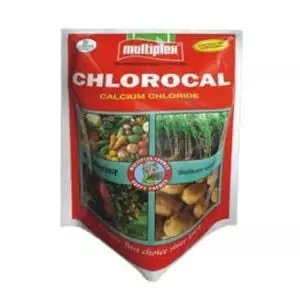
Multiplex Chlorocal (Calcium Chloride) – Corrects Calcium Deficiency
Available Offer
Multiplex Chlorocal: Calcium Chloride (27% Ca) for Fruit Quality
The Specialist Solution for Bitter Pit, Fruit Cracking, and Spongy Tissue.
[Image of Bitter Pit on Apple fruit]
Are your apples developing brown spots in storage? Is your mango pulp turning spongy? These are classic signs of Calcium Deficiency. Multiplex Chlorocal is a high-purity Calcium Chloride fertilizer designed to deliver Calcium directly to the fruit, fixing problems that soil fertilizers cannot reach.
Best For: Late-season application on Apple, Mango, Citrus, and Tomato to improve firmness, prevent rotting, and extend shelf-life.
Why Choose This Product? Key Benefits
- ?Stops Bitter Pit (Apples): Strengthens the cell walls in the fruit skin, preventing the brown sunken spots that destroy market value during cold storage.
- ?Prevents Spongy Tissue (Mango): Protects the mango pulp from heat damage and breakdown, ensuring the fruit remains firm and edible inside.
- ?Prevents Fruit Cracking: Makes the peel of Citrus, Pomegranate, and Tomato more elastic, so it stretches instead of bursting during sudden rains.
- ⏳Extends Shelf Life: Acts as "cement" for plant cells. Firmer fruit rots slower, allowing you to store produce longer and sell when prices are high.
- ?Nitrogen-Free Formula: Unlike Calcium Nitrate, this product contains NO Nitrogen. This is perfect for the harvest stage because Nitrogen makes fruit soft and green, while you want them hard and colored.
Technical Specifications
| Parameter | Details |
|---|---|
| Brand Name | Multiplex Chlorocal |
| Chemical Name | Calcium Chloride ($CaCl_2$) |
| Calcium Content | 27% (Elemental Calcium) |
| Physical Form | White Crystalline Powder |
| Solubility | 100% Water Soluble |
| Application Type | Foliar Spray & Post-Harvest Dip |
How It Works: Mode of Action
[Image of Calcium deficiency causing cell wall collapse]
Plants have a "plumbing problem" with Calcium. It moves easily from roots to leaves (via water) but struggles to move into the fruit. This is why you can have healthy leaves but rotting fruit.
- The Bypass: Multiplex Chlorocal bypasses the roots. When sprayed on the fruit, it enters directly through microscopic pores in the skin.
- The Cement: Once inside, Calcium binds with Pectin to form Calcium Pectate. This acts like "cement" between cells, holding them together firmly so they don't collapse or crack.
- The Shield: It stabilizes the cell membrane, preventing leakage and making the fruit resistant to heat stress and breakdown.
Target Crops & Disorders
| Crop | Target Disorder |
|---|---|
| Apple | Bitter Pit (Brown spots), Internal Breakdown |
| Mango | Spongy Tissue (White corky pulp), Soft Nose |
| Citrus & Pomegranate | Fruit Cracking / Splitting |
| Tomato & Pepper | Blossom End Rot (Black spot on bottom) |
[Image of Spongy Tissue in Mango slice]
[Image of Blossom End Rot on Tomato]
Dosage & Application Guide
The Golden Rule: Calcium Chloride is a salt. Do NOT spray during the hot sun (>30°C) or you will burn the leaves. Spray in the evening.
Dosage per Litre & Tank
| Application | Dose (per Litre) | Dose (20L Tank) | Timing |
|---|---|---|---|
| General Foliar Spray | 4.0 - 5.0 g | 80 - 100 g | During fruit development (Pea/Marble size onwards). |
| Apple Post-Harvest Dip | 5.0 g | 100 g | Dip fruits immediately after harvest before storage. |
| Mango (Spongy Tissue) | 4.0 - 5.0 g | 80 - 100 g | 2 sprays: Marble stage and Egg stage. |
*Tip: Always use a wetting agent (like Maxiwet) to ensure the spray sticks to the waxy fruit skin.
How to Apply: Best Practices
- Timing: Spray only in the cool hours (early morning or late evening). High heat causes rapid evaporation and "salt burn" on leaves.
- Mixing: Do NOT mix with fertilizers containing Phosphorus (like DAP) or Sulfur (Magnesium Sulfate). They will react and clog your sprayer.
- Coverage: Direct the nozzle at the fruit, not just the leaves. The calcium needs to touch the fruit skin to work.
- Safety: This powder absorbs water from the air. Close the packet tightly after use or it will turn into liquid mush.
Frequently Asked Questions
1. Why use Chlorocal instead of Calcium Nitrate?
Calcium Nitrate adds Nitrogen, which promotes leaf growth and softens fruit. Chlorocal has no Nitrogen, making it perfect for the fruiting stage where you want firm, high-quality fruit without new leaf growth.
2. Can I mix it with Boron?
Yes! Mixing Chlorocal with Multiplex Boron is highly recommended. Boron helps the plant move Calcium better, improving results.
3. Will it burn my leaves?
It can if you use too much (>5g/L) or spray during a hot afternoon. Always stick to the recommended dose and spray in the evening.
4. Does it help with tomato rot?
Yes, it is excellent for preventing Blossom End Rot in tomatoes and peppers. Start spraying as soon as the first fruits appear.
5. Is it safe for humans?
It is safe for crops, but the powder can irritate eyes. Wear glasses and wash hands after use. The harvested fruit is safe to eat (food grade Calcium Chloride is often used in cheese making).
Safety & Disclaimer
Always read and follow the instructions on the official product label. The information provided here is for guidance only. Use personal protective equipment (PPE) during application.